10 Best Oyster Knives 2026 in the United States



Related Products
Up to 20% off





Our technology thoroughly searches through the online shopping world, reviewing hundreds of sites. We then process and analyze this information, updating in real-time to bring you the latest top-rated products. This way, you always get the best and most current options available.

Our Top Picks
Winner
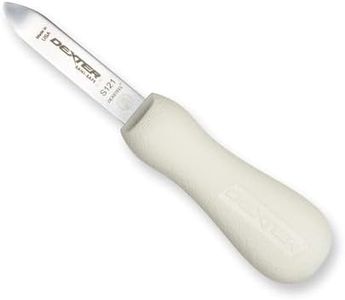
Dexter-Russell 2.75" New Haven Style Oyster Knife | S121 Sani-Safe Series | High-Carbon Stainless Steel | Durable Blade with Curved Tip for Easy Shucking | Corrosion Resistant | Made in USA
Most important from
2162 reviews
The Dexter-Russell 2.75-inch New Haven Style Oyster Knife from the Sani-Safe series is designed to be a reliable tool for shucking oysters. One of its major strengths is the high carbon stainless steel blade, which ensures durability and resistance to staining. The blade's 2.75-inch length is suitable for prying open oyster shells without being too cumbersome. The New Haven pattern blade shape, coupled with a pointed tip, is effective for getting into the oyster hinge and opening the shell efficiently.
Another highlight is the Sani-Safe handle, which is designed for a secure grip, enhancing safety while in use. This knife is NSF certified, indicating it meets high standards for public health protection, which is a reassuring feature for users. Additionally, the knife is made in the USA, which may appeal to those who prefer domestically manufactured products.
However, there are a few drawbacks to consider. The handle, although designed for safety, is made of carbon steel, which might not be as comfortable for prolonged use compared to other materials like rubber or plastic. It also requires hand washing and thorough drying to maintain its condition, which could be seen as inconvenient by some users. This oyster knife is well-suited for anyone who regularly shucks oysters and values durability and safety in their kitchen tools.
Most important from
2162 reviews
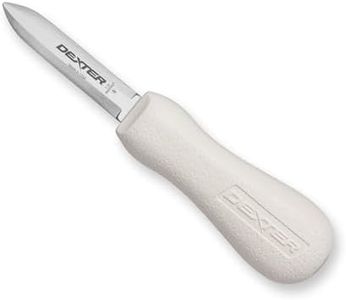
Dexter-Russell 2.75" Providence Pattern Oyster Knife | S126 Sani-Safe Series | High-Carbon Stainless Steel | Durable Tip for Easy Shucking | Corrosion Resistant | Made in USA
Most important from
2162 reviews
The Dexter-Russell S126 Sani-Safe Oyster Knife is a solid choice for anyone who shucks oysters regularly or even occasionally. Its Providence-style blade, with a narrow and tapered tip, is designed to slip easily into the oyster hinge and work cleanly along the shell, which helps reduce effort and risk of shell fragments. The blade length of 2.75 inches is compact enough for precise control while still being long enough to handle most oysters. Made from high-carbon, high-alloy stainless Dexsteel, the blade is strong and corrosion-resistant, so it stays sharp and durable even with frequent exposure to water and salt.
The handle is made from textured polypropylene, giving it a good grip that’s especially helpful in wet conditions, making the knife safer and more comfortable to use. However, this model does not have a significant guard to protect your hand, which some users might prefer for added safety. The knife is NSF certified, ensuring it meets high sanitation standards, which is important when working with food. Weighing only 2 ounces, it feels light in hand without sacrificing durability. It’s recommended to hand wash this knife to maintain its condition.
This oyster knife is suitable for both beginners looking for a reliable and safe tool and more experienced users who want a durable, high-quality blade. Although it may lack a prominent guard, its ergonomic handle and strong blade make it a dependable tool for oyster shucking. Made in the USA by a trusted brand with over 200 years of experience, it also comes with a lifetime guarantee against defects, providing confidence in your purchase.
Most important from
2162 reviews
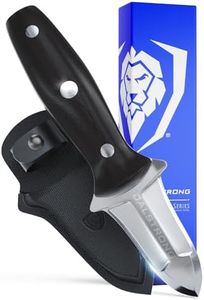
Dalstrong Clam Shucking Knife- 3” Boston Style Shellfish & Oyster Shucker Clamp Knife - Gladiator Series Elite - Forged HC German Steel - Crab Eating Utensils- G10 Handle - W/Sheath - NSF Certified
Most important from
328 reviews
The Dalstrong Clam Shucking Knife is a well-crafted tool designed specifically for shellfish and oyster shucking, featuring a 3-inch Boston-style blade that offers good control for opening oysters. The blade is made from forged high carbon German steel, which provides strength and durability while maintaining a sharp edge for easy shucking. Its stainless steel blade is plain-edged, which is typical for oyster knives, allowing for precise and safe insertion into oyster shells.
The knife has a full tang construction, meaning the blade extends through the handle, adding to its sturdiness. The handle itself is made from G10, a durable and water-resistant material that offers a secure grip even when wet. The black handle includes a guard, which helps protect your hand from slipping onto the blade, enhancing safety during use. Weighing about 0.56 kilograms, it feels solid but not overly heavy, striking a balance between durability and comfort.
This knife is NSF certified, which means it meets certain health and safety standards, giving extra assurance about its quality. With a customer rating around 4.4 out of 5 stars, it satisfies many users looking for a sturdy oyster knife. It is a solid choice for seafood lovers and professionals who need a reliable, well-built oyster knife that combines safety features and a comfortable grip. However, if you prefer a knife that can go in the dishwasher or want a longer blade for bigger oysters, this might not fully meet those specific needs.